America’s landscape has been shaped not only by the iconic attractions that survive but also by those tragically erased by disaster. Some disappeared in dramatic moments of fire, storm, or collapse, while others quietly succumbed to time and sudden catastrophe. These lost landmarks left behind memories, lessons, and cultural echoes that continue to resonate long after the structures themselves vanished. Here are eight unforgettable attractions that disaster claimed too soon.
1. The 1893 Chicago Ferris Wheel

The original Chicago Ferris Wheel, a marvel of the 1893 World’s Columbian Exposition, once symbolized America’s engineering ambition. Standing over 260 feet tall, it attracted millions before being relocated and eventually abandoned. In 1906, it was destroyed by a controlled demolition after years of financial trouble and structural wear. The explosion marked an abrupt end to a landmark that once defined Chicago’s skyline and demonstrated America’s ability to rival European wonders.
2. Crystal Palace at the New York World’s Fair

The Crystal Palace, built in 1853, stood as a dazzling glass-and-iron structure inspired by London’s original. It showcased industrial advancements and drew nationwide admiration. Despite its elegant design, the building had persistent safety concerns that proved devastating when a sudden fire tore through it in 1858. Within minutes, the entire palace collapsed in a glittering inferno, shocking visitors who watched a symbol of progress vanish before their eyes.
3. The Old Summer White House in Warm Springs

President Franklin D. Roosevelt’s treasured retreat in Warm Springs, Georgia, became a beloved national landmark for its personal connection to his life. Built from modest wood and brick, it served as both a therapeutic refuge and a presidential workspace. A devastating fire in 1941 destroyed major portions of the estate, erasing decades of history tied to Roosevelt’s struggle with polio. Though partially rebuilt, the original charm and authenticity were forever lost.
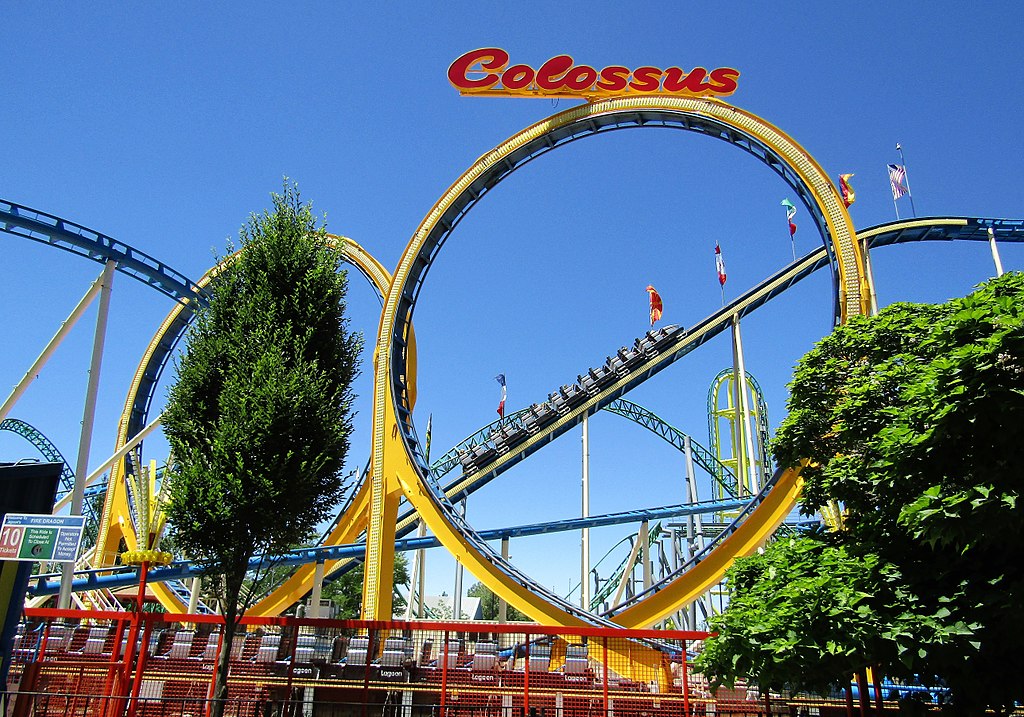
4. The Colossus Roller Coaster at Six Flags Magic Mountain

The Colossus roller coaster, once the world’s tallest and fastest wooden coaster, thrilled millions since opening in 1978. Its massive twin-track structure made it instantly recognizable and a pop-culture staple. In 2014, a fire broke out during renovation work, rapidly engulfing part of the wooden frame. Though the ride was later reimagined, the original towering wooden masterpiece was permanently lost, marking the end of an era for coaster enthusiasts.
5. The San Francisco Cliff House (1909 Version)

The grand 1909 Cliff House overlooking the Pacific was a beloved West Coast attraction known for its ornate architecture and dramatic oceanside setting. Fires had claimed earlier versions, but this third iteration became especially iconic for locals and travelers. A disastrous fire in 1907 had already destroyed its predecessor, and coastal storms later weakened its replacement. Ultimately, the structure was demolished after severe damage, erasing a landmark that once felt inseparable from San Francisco’s identity.
6. The MGM Grand Hotel Atrium (Original 1980 Structure)

Before its redesign, the original MGM Grand in Las Vegas featured a sprawling atrium considered an attraction in its own right. In 1980, a catastrophic fire spread rapidly through the casino level, fueled by highly flammable décor. The blaze caused extensive destruction, leaving the atrium beyond recovery. The tragic event reshaped national fire codes, but it also meant the loss of a grand architectural centerpiece that once defined early Las Vegas extravagance.
7. The Hindenburg Docking Mast at Lakehurst

The Lakehurst Naval Air Station once hosted the towering docking mast for the Hindenburg, making it a key American landmark in aviation history. After the infamous 1937 explosion, much of the surrounding infrastructure was declared unsafe. Storm damage and structural decay further weakened the mast until it was eventually dismantled. Its removal closed a dramatic chapter in airship travel and erased the last physical remnant of one of history’s most devastating transport disasters.
8. The Big Tree Lodge at Glacier National Park

Nestled in Montana’s Glacier National Park, the Big Tree Lodge (formerly Glacier Park Lodge) was a beloved timber landmark supported by massive native Douglas firs. It served generations of travelers seeking mountain beauty. A major fire season in 2003 brought intense heat and ember storms that severely damaged parts of the lodge’s historic wings. Though portions survived, the original timber features lost in the blaze stripped away irreplaceable character and early-20th-century charm.